
What is Advance Tax? Is it important?
Due Date & Amount of Advance Tax
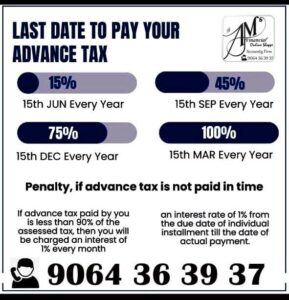
The tables below offer a clear idea about the advance tax due dates and liability for different categories of taxpayers.
-
Advance Tax Payment Date for Business Owners and Self-employed
| Instalment | Due Date of Tax Instalment | Amount of Tax Payable |
| 1st Instalment | Either on or before the 15th of September | At least 30% of the advance tax liability |
| 2nd Instalment | Either on or before the 15th of December | At least 60% of the advance tax liability |
| 3rd Instalment | Either on or before the 15th of March | 100% of the advance tax liability |
-
Advance Tax Payment Date for Companies
| Instalment | Due Date of Tax Instalment | Amount of Tax Payable |
| 1st Instalment | Either on or before the 15th of June | At least 15% of the advance tax liability |
| 2nd Instalment | Either on or before the 15th of September | At least 45% of the advance tax liability |
| 3rd Instalment | Either on or before the 15th of December | At least 75% of the advance tax liability |
| 4th Instalment | Either on or before the 15th of March | 100% of tax liability. |
Who is liable to Pay Advance Tax?
A taxpayer whose total tax liability is more than Rs.10000 after adjusting TDS in a fiscal year must pay advance tax.
It applies to all categories of taxpayers, including – freelancers, professionals, salaried and senior citizens.
Advance Tax Late Date of Payment
It must be noted that delaying advance taxes or paying less than the specified amount against the first due date attracts a penalty at the rate of 1% interest on the remaining tax liability each month. Such an interest is paid under Section 234B and Section 234C of the Income Tax Act,1961.
The interest penalty will also apply if taxpayers fail to pay the due amount by the next deadline. In case they fail to pay the third or last instalment, they will be paying 1% S.I. on the default tax for each month until the entire sum is paid.
You can pay the Advance Tax through the e-filing portal of the I.T. Department of India.
Who are Exempted?
Now that you know how to pay advance tax online here are some details about exemptions-
- Senior citizens above the age of 60 are excused from paying the advance tax.
- If the TDS deducted exceeds the tax payable for the year, the advance tax is not required.
- Salaried people who fall under the TDS net are exempt from paying the advance tax. Any earnings from sources such as interest, rent, capital gains and other non-salary income, on the other hand, will be subject to advance tax.
Is it Refundable?
Here are some details of the tax refund policy which you must be aware of:
- If the Income Tax Department discovers that you paid more tax than you should have, it will reimburse the difference at the end of the year.
- Taxpayers can request a refund by completing and submitting Form 30.
- They must submit their claim within one year of the end of the assessment year.
Why we should pay Advance Tax?
There are major advantages of Advance tax payments, and they are-
- Advance tax aids in lowering taxpayer worry. Taxpayers do not have to worry about running out of money or making last-minute tax payments when they pay their taxes in advance.
- It expedites the collection of taxes.
- It assists organizations in effectively managing their finances and offers an estimate of the income received during the fiscal year.
- It raises government funds since the government can receive interest on the money collected.
- People who pay their taxes in advance avoid falling behind on their obligations.
